
Summary
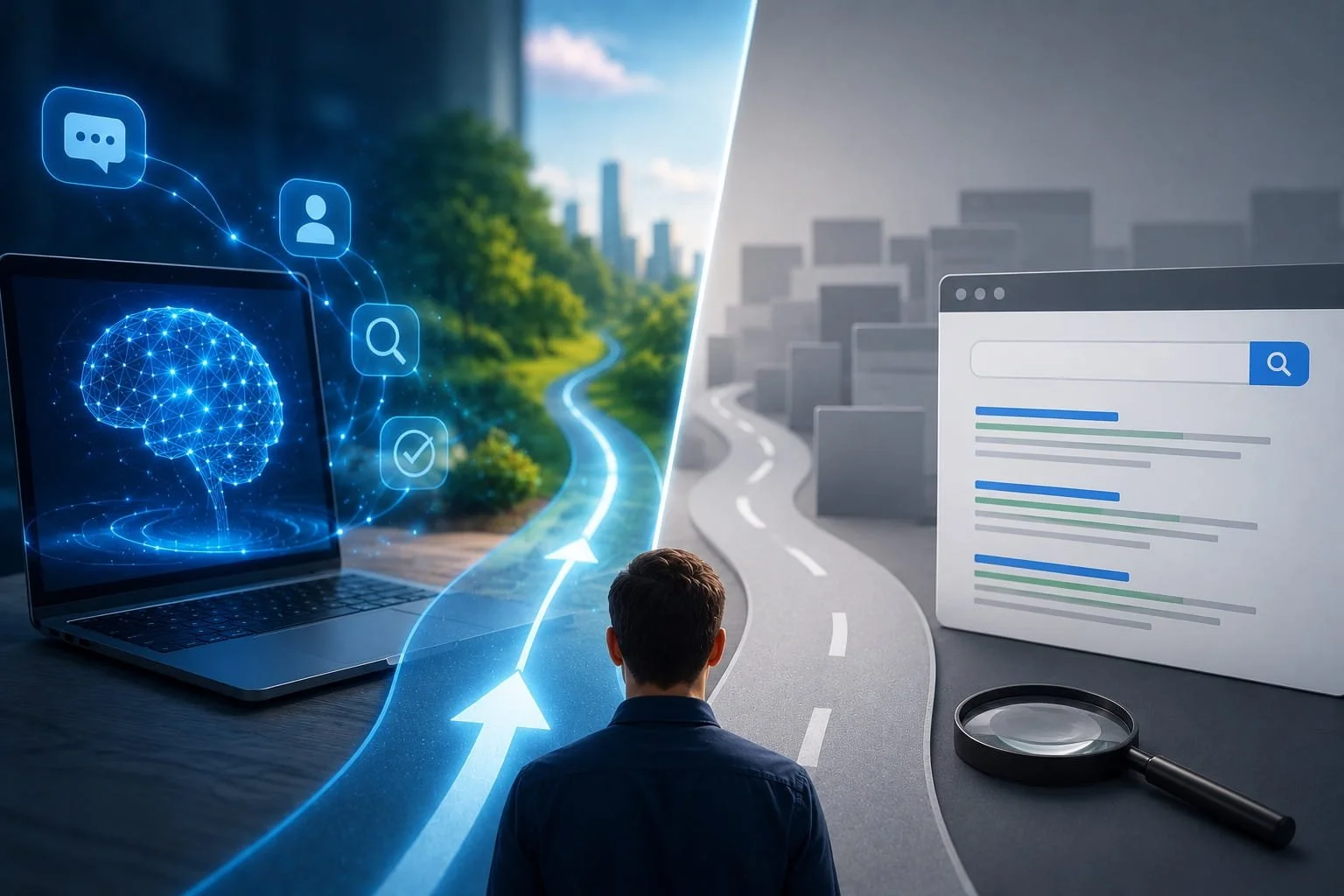
AI search can send more qualified traffic than traditional Google search in certain situations because users often ask highly specific, conversational questions that reveal stronger intent before visiting a website. While Google continues to deliver the majority of organic search traffic for most businesses, AI platforms like ChatGPT, Google AI Overviews, Gemini, Claude, and Perplexity are increasingly helping users research solutions, compare providers, and make purchasing decisions. Businesses that optimize for both traditional SEO and AI search are well positioned to attract visitors who are further along in the buying journey and more likely to convert.
Search behavior is evolving as more people use AI assistants alongside traditional search engines to find answers and evaluate businesses. This shift creates new opportunities for companies to reach highly engaged users before they make purchasing decisions.
Why AI Search Users Often Have Stronger Intent
AI search users frequently ask detailed questions that indicate they are closer to making a decision.
Traditional search often begins with short keyword phrases like "SEO agency" or "digital marketing company." AI search users, however, are more likely to ask complete questions such as, "Which digital marketing strategy generates the best ROI for a local business?" or "How do I optimize my website for ChatGPT?" These longer, conversational queries provide significantly more context about user intent.
Because AI platforms generate personalized responses, users often spend more time refining their questions before clicking through to a website. By the time they visit a business, they may already understand the solution they're looking for, making them more qualified leads than someone conducting broad exploratory searches.
Google continues integrating generative AI into Search while emphasizing that users are asking increasingly complex questions that AI can help answer more effectively, reflecting the broader evolution of search behavior.[1]
How AI Search Can Improve Lead Quality
AI-generated search experiences can help businesses attract visitors who are more informed and more likely to convert.
Rather than presenting a list of links, AI search often summarizes information and recommends sources that appear trustworthy and authoritative. When your website is referenced, visitors frequently arrive after already understanding your expertise, services, or solutions. This can shorten the research phase and improve engagement.
Businesses that establish strong topical authority, publish comprehensive educational content, and demonstrate expertise are more likely to benefit from AI referrals as these platforms continue evolving.
Potential advantages of AI-driven traffic include:
Higher purchase or inquiry intent
Better educated website visitors
Longer engagement with content
Greater trust through AI citations
More targeted informational searches
AI Search vs. Traditional Google Search
AI search and traditional Google search each play valuable roles in attracting qualified website visitors.
Google remains the largest driver of organic website traffic for most businesses because of its enormous user base and mature search ecosystem. AI search, however, is becoming increasingly important for research-oriented queries where users seek recommendations, comparisons, and detailed explanations rather than simply finding websites.
The most effective digital marketing strategy combines traditional SEO with AI Engine Optimization (AEO) and Generative Engine Optimization (GEO). Businesses that optimize for both environments increase their opportunities to reach customers regardless of how they search.
How Businesses Can Prepare for AI Search
Businesses that create authoritative, people-first content are best positioned to benefit from AI search traffic.
AI platforms prioritize trustworthy information, comprehensive topic coverage, and content that demonstrates expertise. Rather than publishing large volumes of keyword-focused pages, businesses should invest in creating complete resources that answer customer questions thoroughly while maintaining strong technical SEO.
Google continues recommending that websites prioritize helpful, reliable, people-first content regardless of whether AI is involved in content creation or search experiences.[2] These same principles also improve visibility across many AI-powered search platforms.
To improve visibility across both Google and AI search, businesses should:
Build topical authority with comprehensive content
Strengthen technical SEO and website performance
Publish original insights and expertise
Optimize for AI Engine Optimization (AEO) and GEO
Update content regularly to maintain accuracy
Although AI search currently represents a smaller portion of overall search traffic than Google, it is growing rapidly as users adopt conversational search experiences. Businesses that prepare now will be better positioned to attract highly qualified visitors as AI becomes an increasingly important part of the digital marketing landscape.
If you'd like to prepare your website for the future of search, contact our team. We'll help you develop an SEO, AEO, and GEO strategy that increases your visibility across traditional search engines and AI-powered platforms while attracting more qualified traffic to your website.
Frequently Asked Questions
Can AI search replace Google Search?
No. Google remains the dominant search platform, but AI search is becoming an important complement for research, recommendations, and conversational queries.What is qualified website traffic?
Qualified traffic refers to visitors who closely match your target audience and are more likely to become customers because their search intent aligns with your products or services.What is AI Engine Optimization (AEO)?
AEO is the practice of optimizing content so AI-powered search platforms can understand, trust, and reference your website in generated responses.Does traditional SEO still matter?
Absolutely. Traditional SEO remains essential for improving visibility in search engines, while AEO and GEO expand your reach into AI-powered search experiences.Should businesses optimize for both Google and AI search?
Yes. Combining SEO with AI optimization helps maximize visibility as users increasingly rely on both traditional search engines and AI assistants.
Citations
AI Overviews and More AI Features in Search, Google, Accessed July 23, 2026, https://blog.google/products/search/generative-ai-search/
Creating Helpful, Reliable, People-First Content, Google Search Central, Accessed July 23, 2026, https://developers.google.com/search/docs/fundamentals/creating-helpful-content